
What Moves You?
That Cinématique Look

Philosophy is the most annoying thing I enjoy. It can be difficult to tell the difference between good and bad philosophers, because they are both annoying, but the best ones are the most annoying.
You are undoubtedly familiar with at least one of Zeno’s paradoxes. The most famous is that to get anywhere, you must first travel halfway there, but first halfway to the halfway point, and so on. The natural conclusion of these infinite half-steps is: Motion is impossible because an infinite number of acts are required to do it. Therefore, motion is an illusion.

What a strange thing to assert. The worst part is that it’s so hard to argue with.
You stand up, walk across the room, and say, “Are you not impressed, Zeno?”
Zeno is not. It seems like you are moving, but you have yet to explain how motion is possible in any real sense. Even the passage of time is impossible, as every moment is infinitely divisible, and there is no motion or change without time.
This is what inspired Democritus to posit the existence of atoms over 2000 years ago. He agreed with Zeno; motion is impossible if everything is infinitely continuous. So, Democritus said, It must not be. There must be a limit to how much everything can be divided. At some point, you get down to tiny, indivisible bits of matter, space, and time. How prescient!
(As an aside, in all of this early thinking about motion, no one asked, “Is it possible for anything to be at rest?” The modern perspective is that it’s not! What a turn of events.)
You may have noticed that time keeps coming up in these arguments about the nature of motion. Time is why the most basic questions about motion went unanswered for two thousand years. Today, it is unremarkable to say miles per hour. Meters per second. It’s ten minutes to the store.
But what was a minute on a sundial? An hour? Mathematicians were fascinated with Zeno’s ideas, but natural philosophers couldn’t make any headway without a reliable way to measure time, so they did other things. To paraphrase a story from my friend Bill Rote about the difference between mathematicians and physicists:
Two college students start across the room from each other, and then reduce their distance by half, by half again, and so on. The mathematician would say they never touch. The physicist might agree that they never touch, but assumes they will get close enough to have a good time.
Of course, people noticed that the farther something falls, the faster it goes. Trips on foot took longer than those on horseback. But how do you figure out how long it takes to walk to Alexandria without asking someone who has? Moreover, an archer knows how an arrow moves—it’s right there in the name—but what is an “arch?” The Ancients had formulas for triangles, squares, circles, and even those maddening conic sections. Why didn’t we have one for the stone that killed Goliath?
In the 14th century, a group called the Oxford Calculators made the first theoretical progress. First, they made the audacious assumption that motion was possible. Then, using the medieval version of a PowerPoint slide, they showed that if you accelerated uniformly from rest, you would go exactly as far as if you had gone half the final speed for the same amount of time.
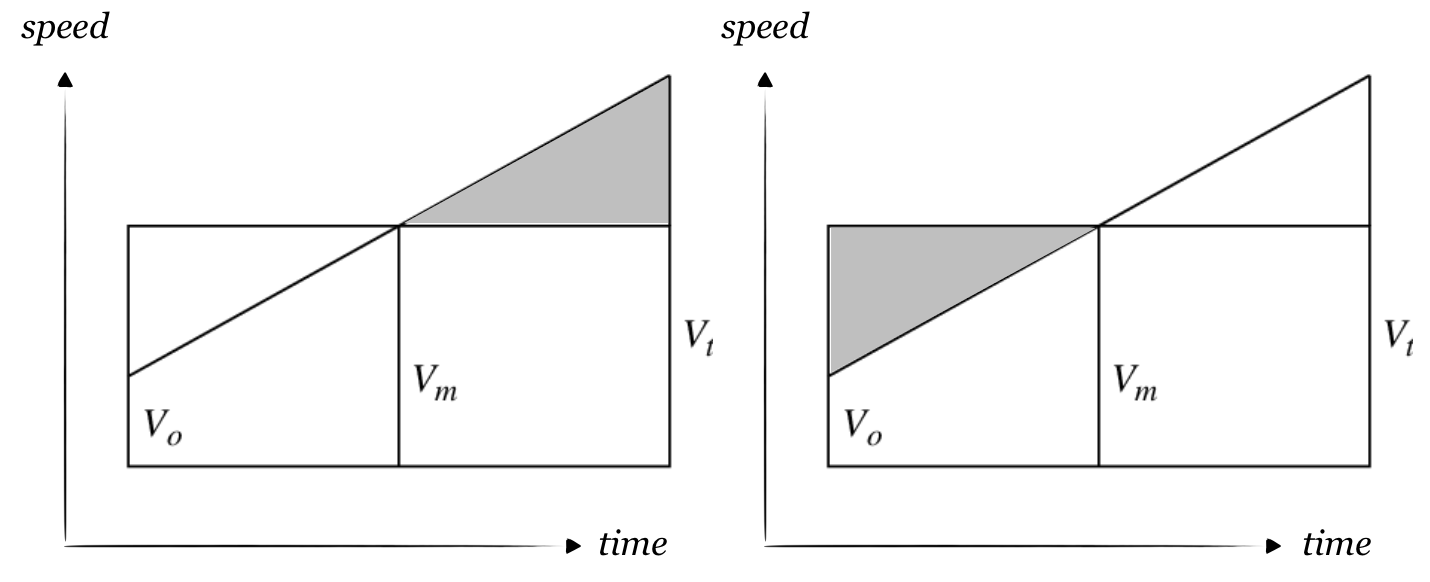
Over two hundred years later, recognizing that objects fell with just such a uniform acceleration, Galileo took the mean speed theorem and measured time well enough to go beyond the geometry. He didn’t have a stopwatch. He weighed the water that poured from a container over a certain amount of time. He used his pulse. He built ramps for balls to roll down, so he could slow gravity’s effects enough to make reasonable measurements with these crude timekeepers.

Galileo found that it takes a ball 1 second to roll down one unit of length. In the next second, it rolls three units. In the third second, five units.
The motion of falling things increased as the square of time. Galileo wrote down something that I probably use once a week. Spazio is the distance traveled (space), s, gravitá is heaviness, g, and tempo is time, t.
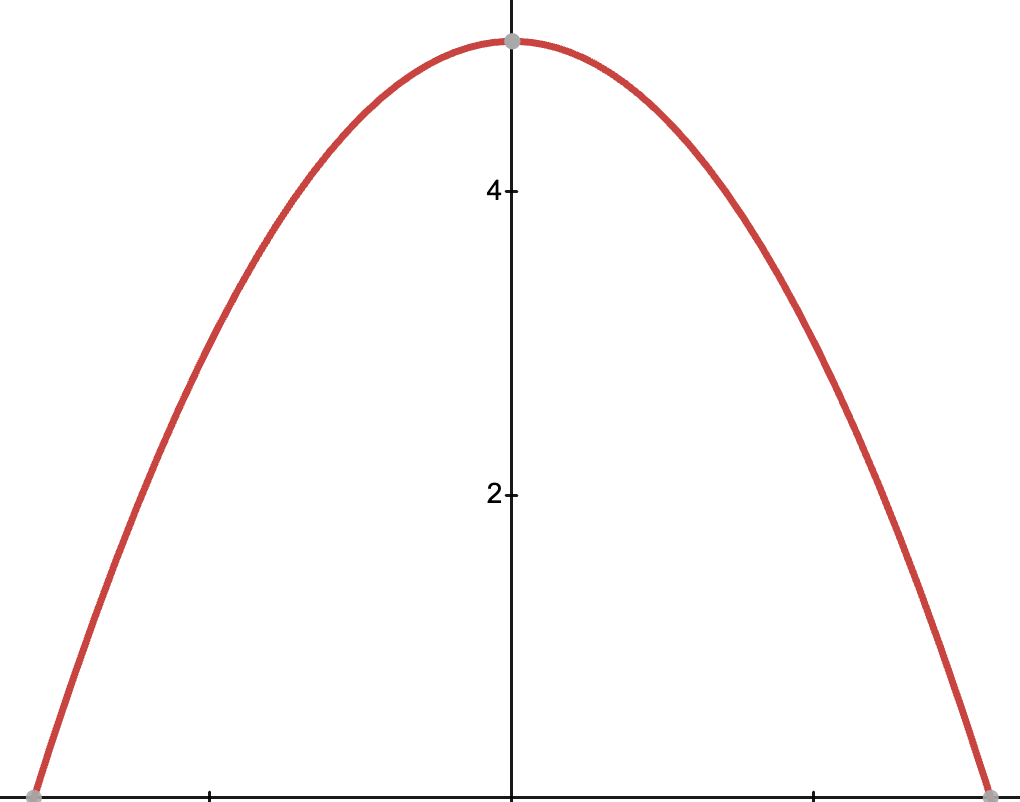
If you make that negative (since gravity is always downward), something thrown upward returns along a parabola, one of those maddening conic sections that Apollonius of Perga figured out in 200BC. Imagine slicing straight down through the side of a cone. This is how what goes up comes down.
With this fantastic beginning, you would think a full set of equations of motion was just around the corner. However, it wasn’t until the 19th century that a field called kinematics was fully developed. In hindsight, the Oxford Calculators were very close. Galileo got even closer.
If you’d like to learn this fun bit of motional math, here’s a quick lesson in kinematics:
Even intellectual motion takes time. We are still arguing about whether time and space are “real,” whatever that means. The fact that Democritus arrived at the idea of atoms simply because he couldn’t accept Zeno’s paradox shows that the philosophical questions are valuable. It’s not easy to be professionally annoying, and it’s good that someone is. If we’re doing practical physics, we can always just figure out if we’re close enough to have a good time.
Yours within reason,
The Natural Philosopher
Note: There was a lot of great philosophy about motion in other parts of the world, like The Immutability of Things by Seng Zhao. I don’t know as much about those philosophical cultures. I’m staying in my lane.
As a career math teacher (geometry and calculus most relevant here) I wish I could have had you as a guest speaker! These posts have been awesome -- clear, on topic, and fun. Makes me wish I weren't retired... almost!